


Reliable continuous level monitoring despite dust and narrow silo geometries
In aluminium foundries, casting sand is a critical material used to form moulds for metal casting.
Maintaining a consistent supply is essential to ensure uninterrupted production. To achieve this, foundries must accurately monitor the quantity of sand stored in silos feeding the moulding process.
A UK aluminium casting facility was looking to continuously monitor the level of casting sand in its main storage silo. To ensure safe overfill protection, the silo was already equipped with a switch used as a point level sensor. However, during normal operation, operators lacked a clear overview of the currently available material volume inside the silo.
To implement continuous real-time level monitoring, the foundry tasked UWT UK Ltd with developing a suitable measurement solution for the application.
The challenge
To achieve reliable continuous level measurement, several process-specific application conditions had to be considered:
- Dust generation: Sand filling and discharge cycles produce airborne dust that can interfere with measurement signals.
- Small silo dimensions: Narrow silos increase the likelihood of measurement signals reflecting from silo walls.
- Internal reflections: In confined vessel geometries, unwanted signal reflections can occur if the sensor beam angle is too wide.
The foundry therefore required a continuous level measurement solution capable of delivering stable and precise measurement results even under these process conditions.
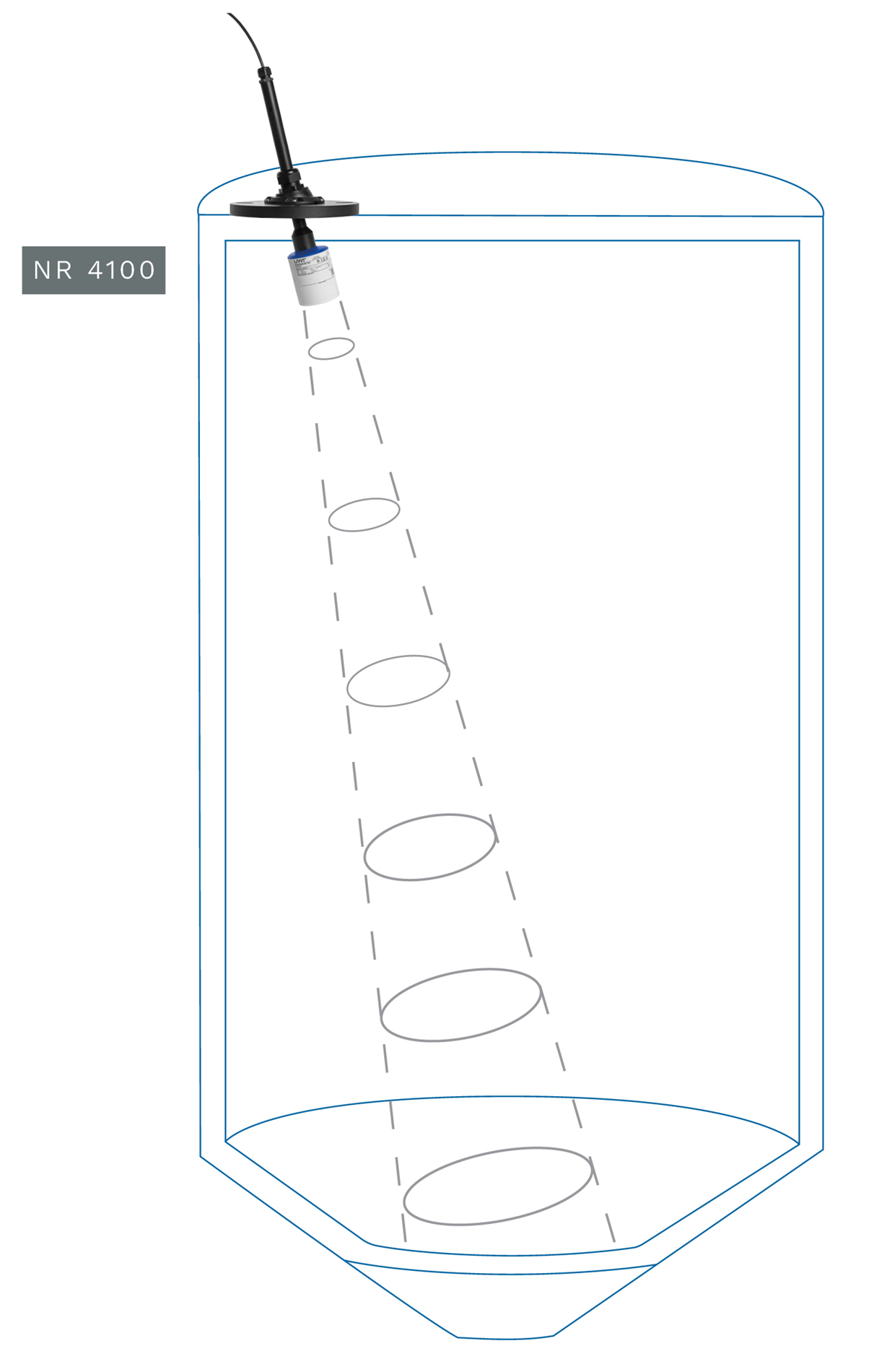
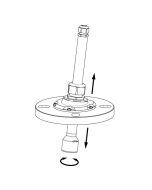
Using the aiming flange, the FMCW radar sensor NR 4 can be precisely aligned towards the centre of the silo.
The solution
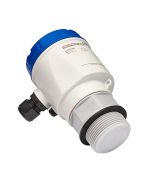
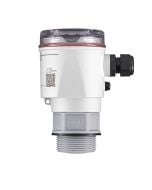
Following a site assessment, UWT recommended installing the , an 80 GHz Frequency-Modulated Continuous-Wave (FMCW) radar level sensor designed for bulk-solid applications.
One of the key features influencing this selection was the radar sensor's 4° narrow beam angle, which allows the measurement signal to be precisely focused on the material's surface. By concentrating the radar energy within a small measurement area, reflections from silo walls and internal structures are minimised.
The radar's high operating frequency also improves measurement resolution and enhances its ability to distinguish the actual material surface from dust or other signal reflections.
To further optimise performance, the radar sensor was installed using an aiming flange, allowing the beam to be directed towards the centre of the silo even though the sensor itself was not mounted centrally.
Installation & setup
Once the radar sensor was installed, UWT engineers returned to assist with commissioning the system.
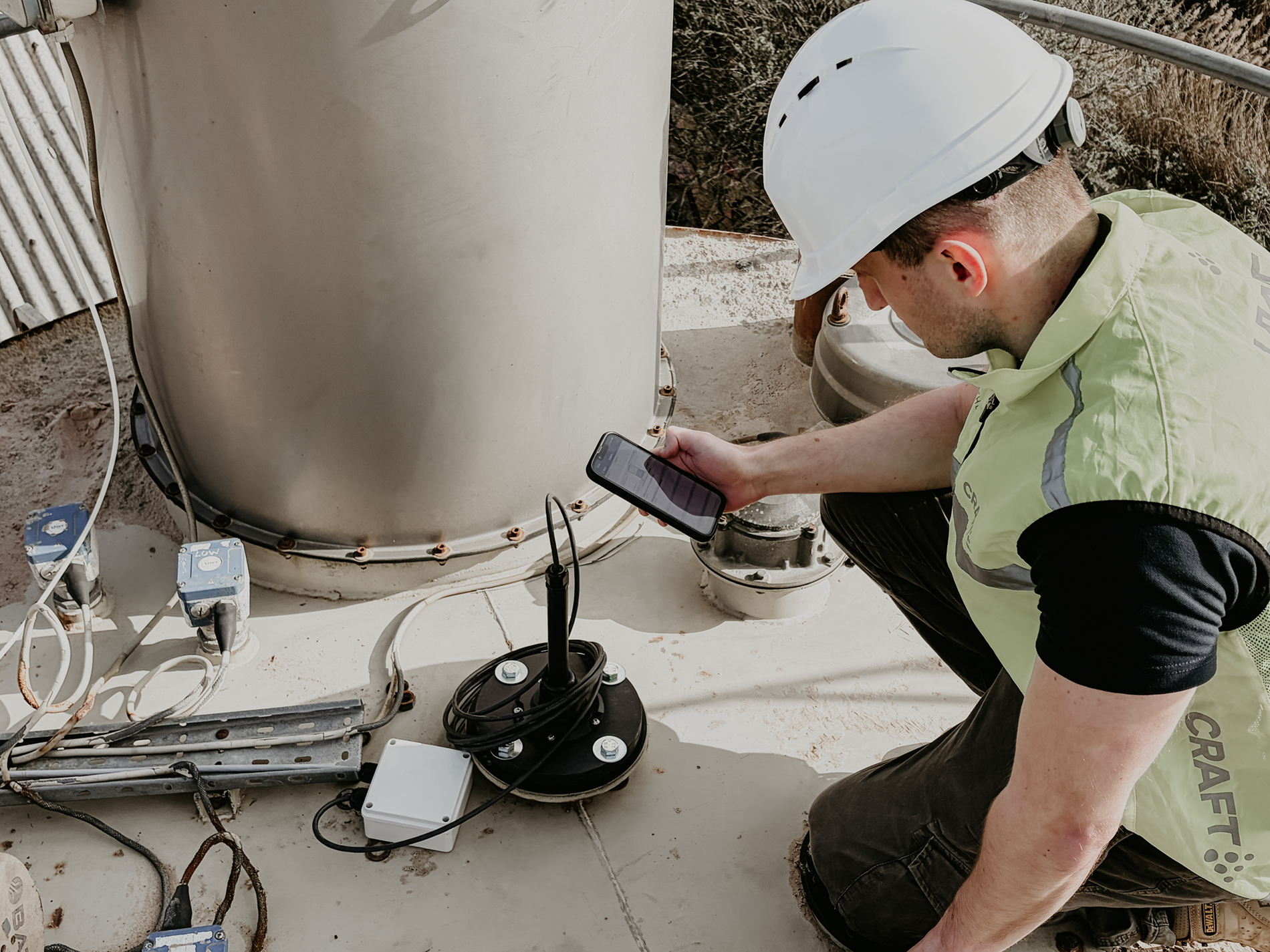
The setup process was straightforward. After power was supplied to the sensor, configuration was completed via Bluetooth using the UWT LevelApp, enabling quick adjustment of measurement parameters.
The following measurement settings were configured:
- Full level (minimum measurement distance): 300 mm
- Empty level (maximum measurement distance): 6000 mm
These parameters defined the operating range for monitoring the casting sand level within the silo.
Signal verification & results
During commissioning, the radar signal quality was verified using the Echo Curve diagnostic feature available within the UWT LevelApp.
The Echo Curve provides a graphical representation of signal reflections detected at various distances from the sensor. A strong and clearly identifiable peak indicates a reliable reflection from the material surface.
In this case, a clear reflection was observed at approximately 5.5 metres, confirming that the silo was nearly empty at the time of testing. The signal strength and clarity demonstrated that the radar sensor was correctly aligned and operating without significant interference.
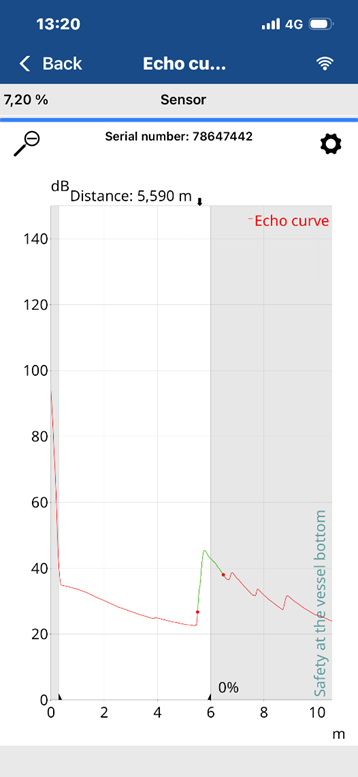
Clear radar reflection at approx. 5.5 m confirmed a nearly empty silo and stable signal quality during commissioning of the NivoRadar® NR 4
Key benefits
Continuous level monitoring: Operators now have real-time visibility of casting sand levels instead of relying on a single high-level switch.
Improved process control: Better inventory tracking allows more accurate planning of refilling cycles.
Reliable operation in dusty environments: FMCW radar tachnology performs consistently despite airborne dust.
Simple commissioning and configuration: Bluetooth connectivity and mobile app configuration simplify installation and diagnostics.
"Thank you for your time yesterday. Your good humour and positive approach to the ever-changing circumstances were greatly appreciated." the plant operator confirmed.
Conclusion
The implementation of 80 GHz FMCW radar technology enabled the aluminium foundry to move from basic point-level detection to continuous level monitoring of its casting sand silo.
The NivoRadar® 4100 sensor proved to be well suited to the application, providing reliable measurements even in a dusty environment and within a narrow silo geometry.
As a result, the foundry now benefits from improved visibility of its casting sand inventory and greater confidence in managing its material supply.
UWT. LEVEL. UP TO THE MAX.