
-
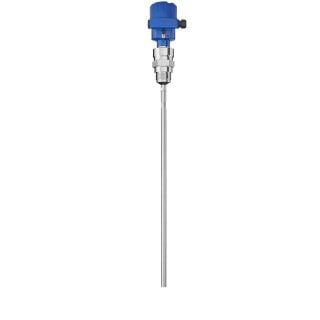
Radar sensors
NivoGuide® - NG 3100
Medium Solids Process pressure -1 bar … +40 bar (-14.5 psi … +580 psi) Process temperature -40°C ... +200°C (-40°F … +392°F) -
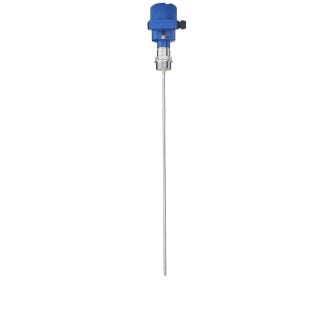
Radar sensors
NivoGuide® - NG 8100
Medium Liquids Process pressure -1 bar … +40 bar (-14.5 psi … +580 psi) Process temperature -60°C ... +200°C (-76°F ... +392°F) -
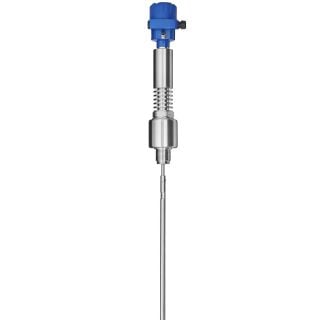
Radar sensors
NivoGuide® - NG 8200
Medium Liquids Process pressure -1 bar … +400 bar (-14.5 psi … +5800 psi) Process temperature -196°C … +450°C (-321°F … +842°F)
with Guided Radar / TDR
Guided radar sensors use so-called pulse technology to determine the level. An electromagnetic wave generated by the electronics is coupled to the probe and guided downward along the probe. When the wave hits the material surface, part of the energy is reflected. This so-called echo signal is also guided along the rod back to the electronics, detected by them and converted into a level indication via a transit time measurement. With pulse technology, the running time is thus measured directly.
Guided radar sensors are used in both bulk solids and liquid applications.