
-
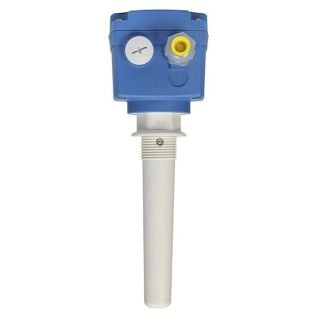
Capacitive sensor
Capanivo® - CN 4020
Medium Solids Process pressure -1 bar … +25 bar (-14.5 psi … +363 psi) Process temperature -40°C … +180°C (-40°F … +356°F) -
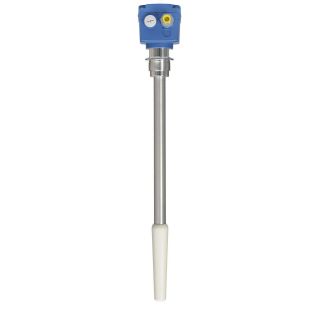
Capacitive sensor
Capanivo® - CN 4030
Medium Solids Process pressure -1 bar … +16 bar (-14.5 psi … +232 psi) Process temperature -40°C … +110°C (-40°F … +230°F) -

Capacitive sensor
Capanivo® - CN 4050
Medium Solids Process pressure -1 bar … +6 bar (-14.5 psi … +87 psi) Process temperature -30°C … +80°C (-22°F … +176°F) -
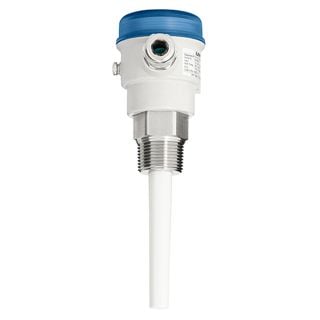
Capacitive sensor
Capanivo® - CN 7100
Medium Liquids Process pressure -1 bar … +10 bar (-14.5 psi … +145 psi) Process temperature -30°C … +100°C (-22 … +212°F) -
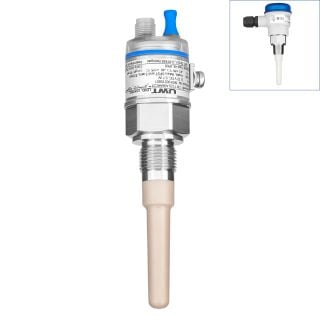
Capacitive sensor
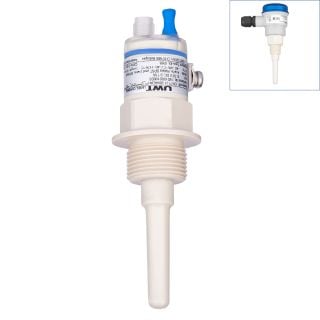
Capanivo® - CN 7120 - Stainless steel
Medium Liquids, Solids Process pressure -1 bar … +25 bar (-14.5 psi … +363 psi) Process temperature -40°C … +125°C (-40°F … +257°F), CIP/SIP up to 150°C (302°F) -
Capacitive sensor
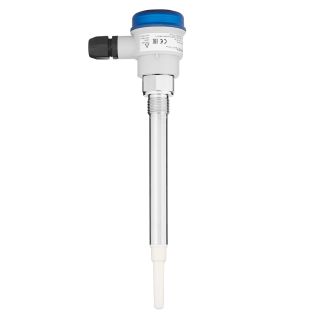
Capanivo® - CN 7121 - Synthetic
Medium Liquids, Solids Process pressure -1 bar … +10 bar (-14.5 psi … +145 psi) Process temperature -40°C … +125°C (-40°F … +257°F), CIP/SIP up to 150°C (302°F) -
Capacitive sensor
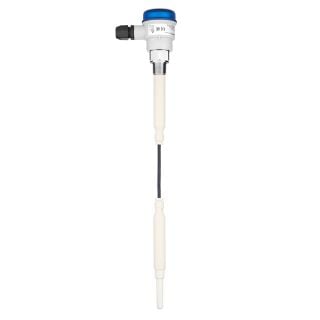
Capanivo® - CN 7130
Medium Liquids, Solids Process pressure -1 bar … +25 bar (-14.5 psi … +363 psi) Process temperature -40°C … +125°C (-40°F … +257°F), CIP/SIP up to 150°C (302°F) -
Capacitive sensor
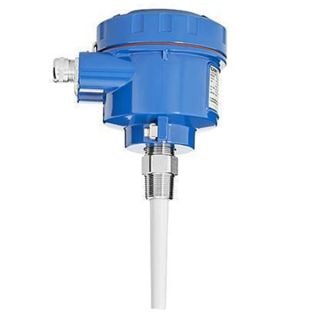
Capanivo® - CN 7150
Medium Liquids, Solids Process pressure -1 bar … +10 bar (-14.5 psi … +145 psi) Process temperature -40°C … +125°C (-40°F … +257°F), CIP/SIP up to 150°C (302°F) -
Capacitive sensor
Capanivo® - CN 8100
Medium Liquids Process pressure -1 bar … +25 bar (-14.5 psi … +363 psi) Process temperature -40°C … +125°C (-40°F … +257°F) -
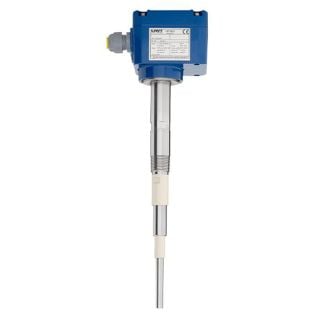
Capacitive sensor
RFnivo® - RF 3100
Medium Solids Process pressure -1 bar … +25 bar (-14.5 psi … +363 psi) Process temperature -40°C … +240°C (-40°F … +464°F) -

Capacitive sensor
RFnivo® - RF 3200
Medium Solids Process pressure -1 bar … +25 bar (-14.5 psi … +363 psi) Process temperature -40°C … +240°C (-40°F … +464°F) -
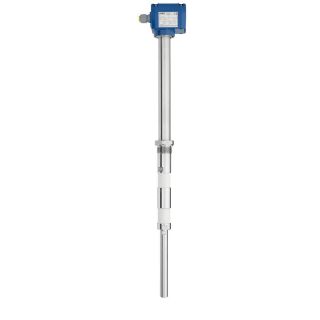
Capacitive sensor
RFnivo® - RF 3300
Medium Solids Process pressure -1 bar … +10 bar (-14.5 psi … +145 psi) Process temperature -40°C … +500°C (-40°F … +932°F) -
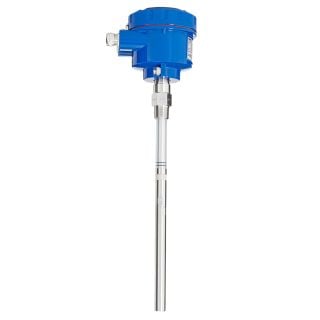
Capacitive sensor
RFnivo® - RF 8100
Medium Liquids Process pressure -1 bar … +35 bar (-14.5 psi … +511 psi) Process temperature -40°C ... +200°C (-40°F … +392°F) -
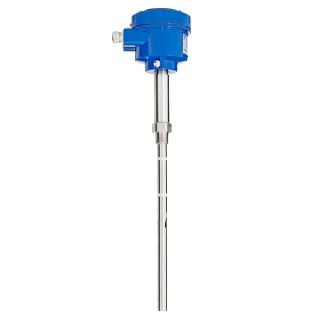
Capacitive sensor
RFnivo® - RF 8200
Medium Liquids Process pressure -1 bar … +35 bar (-14.5 psi … +511 psi) Process temperature -40°C … +400°C (-40°F … +752°F)
with Capacitive level switches
In addition to the capacitive level switch series , there is another type of sensor, the RF level detector , which is also based on the operating principle of a capacitor. The two types therefore do not differ in the way the limit level is determined, but rather in their mechanical design. As a result, they also cover different areas of application.
RF level detectors measure the capacitance between their probe (active electrode) and a reference electrode, which can be a metallic container wall, for example. If the probe is covered with material, this leads to a change in capacitance, which is detected by the electronics and output as a switching signal (relay or transistor). The dimensions of the capacitor can be variably changed over the probe length, which leads to an increase in sensitivity. Because of this variability, RF sensors must be calibrated after installation.
Capacitive level detectors do not require a metallic vessel wall for measurement. The two conductive electrodes required for a reliable measurement result are completely integrated into the probe. This simplifies commissioning, as no calibration is required after installation.
FAQs
What are the advantages of capacitive measurement technology?
- Suitable for narrow openings and complex containers
- For high temperatures, high pressure and aggressive chemicals
- Interface measurement
- For liquids, bulk solids and slurries
What needs to be considered with capacitive measurement technology?
- Can be sensitive to caking
- Possible wear on plastic cantilevers
- Tank shape and turbulence
- Variable dielectric constant
Which devices are useful for CIP and SIP?
A capacitive point level switch for liquids is suitable for these processes. These sensors are sealed so that no liquid can enter. These devices are available with FDA certification and cantilevers made of PVDF and PPS.