

Reliable level measurement for safe processes in tanks, silos and plants
Your benefits at a glance:
- Safe overfill protection and dry run detection
- Reliable measurement in acids, alkalis and aggressive media
- Stable performance despite foam, dust and buildup
Free & non-binding • Fast response • Personal consultation
Reliable level measurement is the foundation of safe and efficient chemical processes – for both liquids and bulk solids.
UWT sensor solutions provide stable measurement results even under demanding conditions such as aggressive media, foam formation, dust or buildup.
Typical Challenges in the Chemical Industry
Chemical processes place high demands on measurement technology. Typical challenges include:
- Aggressive media such as acids and alkalis
- Dust generation in bulk solids
- Foam formation and vapour
- Buildup and deposits
- High safety requirements (e.g. overfill protection, hazardous area approvals)
Reliable level measurement is essential for safe plant operation and stable processes.
Reliable Level Measurement –
even under Challenging Conditions
Depending on the application, different measurement technologies are used to ensure stable results:
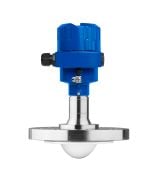
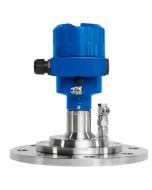
- Radar for continuous level measurement in tanks and silos
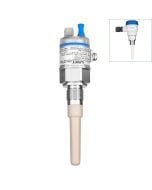
- Capacitive sensors for level and interface measurement
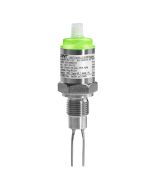
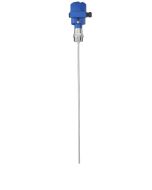
- Reliable point level detection to prevent overfilling or empty running, e.g. with rotary paddle switches, vibrating level switches and capacitive sensors
The right technology ensures maximum process safety and long-term stable measurement results.
Typical Applications in the Chemical Industry
UWT solutions cover the entire process chain – from liquids to bulk solids:
Tank storage
Reliable overfill protection for chemical tanks and storage vessels
Silos
Reliable level detection in bulk solids such as powders, granules and dusty media
Reactors
Stable level measurement in dynamic processes and changing media
Filling and dosing systems
Accurate empty detection for uninterrupted processes
Real-World Applications in the Chemical Industry
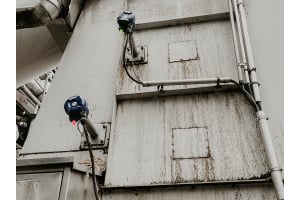
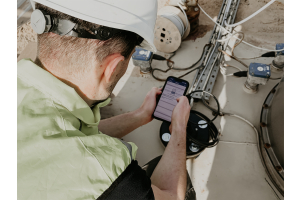
Learn how UWT sensor solutions are used in real applications:
FAQ – Level Measurement in the Chemical Industry
Which sensors are suitable for solids in chemical processes?
Selecting the right level measurement technology depends strongly on the material properties and process conditions. In the chemical industry, solids such as powders, granules or dusty materials are commonly used – often under demanding conditions such as dust, buildup or hazardous areas.
Rotary paddle switches (e.g. Rotonivo®)
Ideal for reliable point level detection in silos and vessels.
- Powders, granules and solids with medium to high bulk density
- Applications with consistent material movement
- Robust standard applications in dusty environments
Vibrating level switches (e.g. Vibranivo®)
Suitable for light, fine or irregular solids.
- Low bulk densities
- Changing material properties
- Challenging process conditions with buildup
Radar sensors (e.g. NivoRadar®)
For continuous level measurement – even under difficult conditions.
- Large silos and vessels
- Dust-intensive processes
- Applications with internal structures or long measuring distances
Electromechanical lot systems (e.g. NivoBob®)
For precise continuous level measurement in solids silos.
- Very high silos
- Changing material surfaces
- Accurate inventory measurement independent of dust or material properties
In many applications, a combination of continuous measurement and point level detection is used to ensure maximum process safety.
Which sensors are suitable for liquids in chemical processes?
Selecting the right level measurement technology for liquids depends on the media properties and process conditions. In the chemical industry, aggressive, conductive, viscous or foaming media are common and place high demands on measurement technology.
Capacitive sensors (e.g. Capanivo®)
For point level and interface measurement in liquids.
- Conductive and non-conductive media
- Applications with buildup or coating
- Interface measurement, e.g. oil/water
Radar sensors (e.g. NivoRadar®)
For continuous, non-contact level measurement in tanks and vessels.
- Aggressive media such as acids and alkalis
- Applications with vapour, temperature or pressure
- Large tanks and changing process conditions
Vibrating level switches (e.g. Vibranivo VN 7®)
For reliable point level detection independent of media properties.
- Liquids with changing properties
- Insensitive to buildup, flow, turbulence and air bubbles
- Safety-related applications such as overfill protection
In many applications, a combination of continuous measurement and point level detection is used to ensure maximum safety and plant availability.
How does overfill protection work in chemical tanks and silos?
Overfill protection is typically achieved using a separate point level sensor that operates independently of the continuous level measurement system. When a defined maximum level is reached, the sensor triggers a signal to the control system. This allows overfilling to be prevented at an early stage and increases process safety.
Which technology is suitable for dust, foam or buildup?
This depends on the medium, vessel geometry and measurement task. Radar is often suitable for continuous measurement in dust, vapour or changing conditions. For point level detection, vibrating, capacitive or rotary paddle sensors are used depending on the application. Selecting the right technology for the specific process is essential.